
Audemars Piguet Royal Oak, the icon of the luxury sports watch
In 1972, offering a steel watch that cost more than a gold one was almost a provocation. Yet that is the bet Audemars Piguet made, in the middle of the quartz crisis, with a design drawn in a single night. More than 50 years later, the Audemars Piguet Royal Oak has become the ultimate benchmark of luxury sports watches.
For buyers, this fame has a downside: endless waiting lists, a multitude of references and a secondary market where price gaps are significant.
This guide traces the history of the model, explains the differences between the Jumbo and the 15400, 15500 and 15510 references, presents the main variations and gives you benchmarks to buy a Royal Oak with confidence.
The history of the Audemars Piguet Royal Oak
In the early 1970s, the Le Brassus manufacture, founded in 1875, was looking for an answer to the competition from quartz watches. Its managing director, Georges Golay, asked designer Gérald Genta for an unprecedented steel watch for the Italian market.
According to this detailed history of the Royal Oak published by Time and Watches, Genta drew the model overnight, inspired by a diver's helmet. Unveiled at the Basel fair in 1972, the 5402ST measured 39 mm in diameter and about 7 mm thick, spectacular proportions for the time. Its launch price exceeded that of several gold dress watches.
The name refers to the Royal Navy ships called HMS Royal Oak, themselves named after a famous oak tree in English history. Met with scepticism at first, the watch gradually found its audience. From the mid-1970s, the brand expanded the collection with new sizes, new materials and, later, complications.
The octagonal bezel and the integrated bracelet
The Royal Oak signature comes down to a few elements. The octagonal bezel is held by eight visible hexagonal screws, precisely aligned. The bracelet, integrated into the case, extends the line of the watch without interruption.
The finishing alternates between satin-brushed surfaces and polished bevels. This hand work, difficult to reproduce, partly explains why counterfeits often give themselves away at first inspection.
The Tapisserie dial
The guilloché dial with its pattern of small squares, called Tapisserie, completes the identity of the model. The original version uses the Petite Tapisserie. The 41 mm references adopted the Grande Tapisserie, with larger squares, which makes it easy to tell the generations apart.
The Royal Oak Jumbo, the collectors' reference
The nickname Jumbo refers to the 39 mm extra-thin Royal Oaks, direct heirs of the 5402. For decades, they kept the original extra-thin calibre, up to the 15202 reference, discontinued in 2021.
For the 50th anniversary, the brand presented the 16202. As explained in this analysis of the Royal Oak Jumbo 16202 by SJX, it adopts the new calibre 7121, which replaces the calibres 2120 and 2121 used since 1972, while keeping the case dimensions.
The Jumbo appeals to collectors looking for the silhouette closest to the original. It is also the hardest Royal Oak to obtain in a boutique.
39 mm Jumbo or 41 mm Royal Oak
On the wrist, the difference in diameter exceeds 2 millimetres. The very thin Jumbo slips under a shirt cuff and evokes the elegance of the 1970s. The thicker 41 mm models have a sportier presence and better suit larger wrists. The integrated bracelet accentuates these differences, since it leaves no flexibility where it meets the case. Trying both sizes before buying avoids many regrets.
The Royal Oak 15400, 15500 and 15510 references explained
The three-hand Royal Oak with date, known as the "Selfwinding", is the most widespread model. Several generations have followed one another, and their differences directly influence the price on the secondary market.
|
Reference |
Diameter |
Calibre |
Key point |
|
15300 |
39 mm |
3120 |
2000s generation |
|
15400 |
41 mm |
3120 |
Move to the 41 mm size |
|
15500 |
41 mm |
4302 |
New calibre, power reserve of about 70 hours |
|
15510 |
41 mm |
4302 |
Current generation, aesthetic refinements |
Changes from one generation to the next
The 15400 popularized the 41 mm size and remains appreciated for its value for money. The 15500 marks a technical leap with the calibre 4302, more modern and with an extended power reserve. The 15510, launched in 2022, keeps this calibre with presentation adjustments.
For a buyer, the 15400 is often the most accessible entry point. The 15500 and the 15510 are aimed at those who favour a recent movement.
Chronograph, perpetual calendar and Offshore
Beyond the three-hand model, the collection has diversified widely:
- The Royal Oak chronograph: a highly sought-after sporty compromise, especially with a blue dial.
- The perpetual calendar: a grand complication that displays the date, day, month and leap years, sometimes offered in black ceramic.
- The Royal Oak Offshore: launched in 1993, it offers a more massive case and a bolder look. At its release, its proportions earned it the nickname "The Beast".
- The gold models: yellow, rose or white, for a more assertive version of the icon.
Each variation has its own price dynamics. This buying guide for an Audemars Piguet in Canada presents all of the brand's collections.
The Royal Oak secondary market in Canada
In Audemars Piguet boutiques, access to the most sought-after models remains limited and often depends on the client's purchase history. The secondary market is therefore the most direct route for many Canadian buyers.
Prices and value factors
Prices of a pre-owned Royal Oak vary widely depending on several criteria. The reference and the dial colour weigh heavily, as does the presence of the box, papers and warranty card. The condition of the bracelet also matters: an over-polished bracelet loses the sharpness of its edges, which reduces its appeal to collectors.
What to check before buying
Before buying a pre-owned Royal Oak, several checks are essential. The serial number and reference engraved on the caseback must match those on the warranty card. The alignment of the bezel screws, the relief of the Tapisserie dial and the crispness of the satin finishes are good indicators. Finally, having a watchmaker open the caseback confirms the calibre and the absence of non-original parts.
A watch of this level deserves rigorous verification. This guide to sourcing and authentication services in Montreal describes the steps of a professional appraisal. For buyers who see the Royal Oak as an investment, this guide to investing in a luxury watch presents the risks and the criteria to consider.
Audemars Piguet Royal Oak, a bold move that set the standard
The Royal Oak redefined what a luxury watch could be: sporty, in steel and yet among the most desirable in the world. Choosing the right one comes down to three questions: the size you want, the movement generation and the budget.
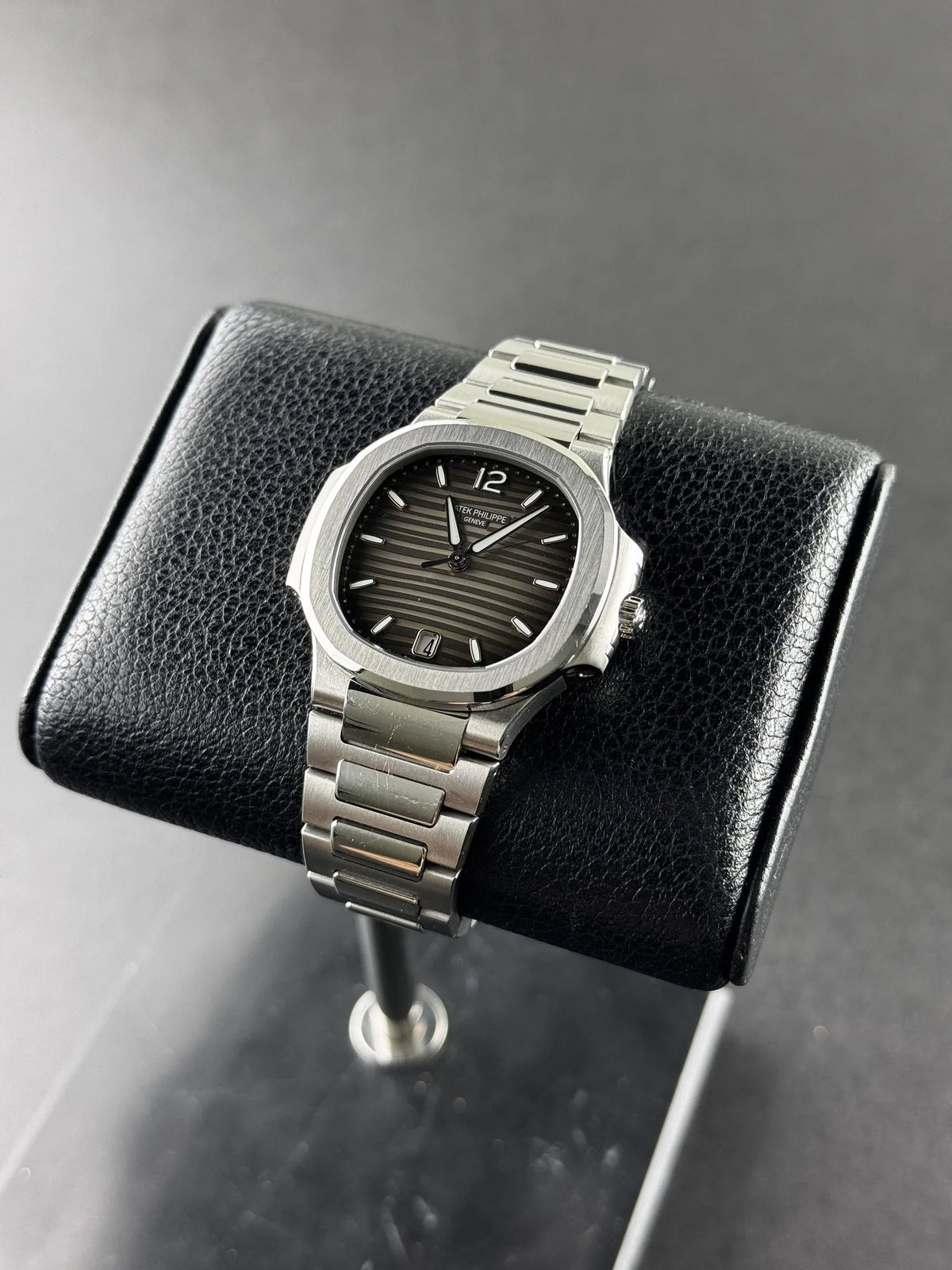
The Jumbo appeals to purists, the 15400 to pragmatic buyers and the complications to seasoned collectors. To broaden your thinking to Gérald Genta's other icons, this guide lets you access rare Patek Philippe models, including the Nautilus.
Frequently asked questions about the Audemars Piguet Royal Oak
Why is the Audemars Piguet Royal Oak so hard to get?
The Audemars Piguet Royal Oak is hard to get because the manufacture's production remains limited, while global demand far exceeds supply. Boutiques often favour their loyal clients for the most sought-after models. As a result, waiting lists grow longer and many buyers turn to the secondary market, where pieces are available immediately, but often at a higher price.
What is the difference between the Royal Oak 15400 and the 15500?
The Royal Oak 15400 and the 15500 share the same 41 mm diameter, but their movements differ. The 15400 uses the calibre 3120, while the 15500 adopts the calibre 4302, more recent and with a power reserve of about 70 hours. Details of the dial and the hour markers also change. On the secondary market, the 15400 is generally the more accessible of the two.
Royal Oak or Patek Philippe Nautilus, which one to choose?
Both watches were designed by Gérald Genta, but their character differs. The Royal Oak has a more angular geometry, with its visible screws and its pronounced octagon. The Nautilus offers more rounded lines, inspired by a ship's porthole. The choice is mostly a matter of aesthetic preference, budget and the availability of the references you want at the time of purchase.