Selling your Patek Philippe in Canada and calculating what you keep
Key takeaway: Selling your Patek Philippe in Canada comes down to three amounts: the offer made for your specific watch, what the chosen channel takes and the tax on the gain. A complete file supports the offer. The commission paid and the taxes paid at purchase, for their part, reduce the taxable gain.
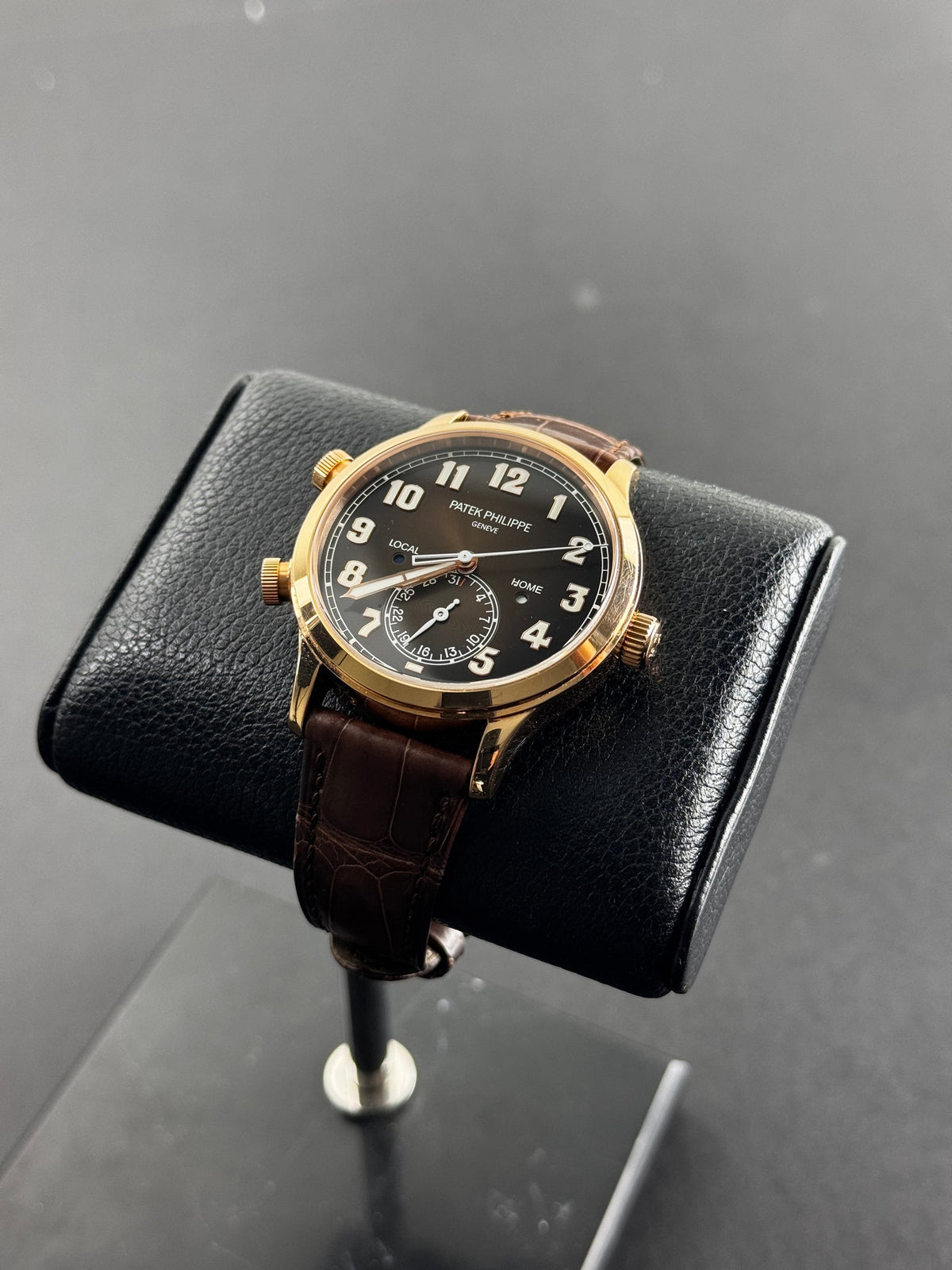
A Calatrava resold for $45,000 on consignment does not leave $45,000 to its owner. At 12%, a rate within the usual range, $5,400 stays with the consignor, then the tax authorities claim their share of the gain. Before selling your Patek Philippe, that remainder is what you need to know, and the asking price on a resale listing tells you nothing about it.
The offer is for your watch, not for the reference
In short: Two watches of the same reference receive different offers, because the buyer assesses the papers, the numbers, the service history and the condition of the case of that specific piece.
What the buyer checks, and what each gap in the file costs:
|
File item |
What the buyer checks |
Effect on the offer |
|---|---|---|
|
Certificate of origin |
Reference and numbers identical to those of the watch |
Missing: slower resale, lower offer |
|
Case and movement numbers |
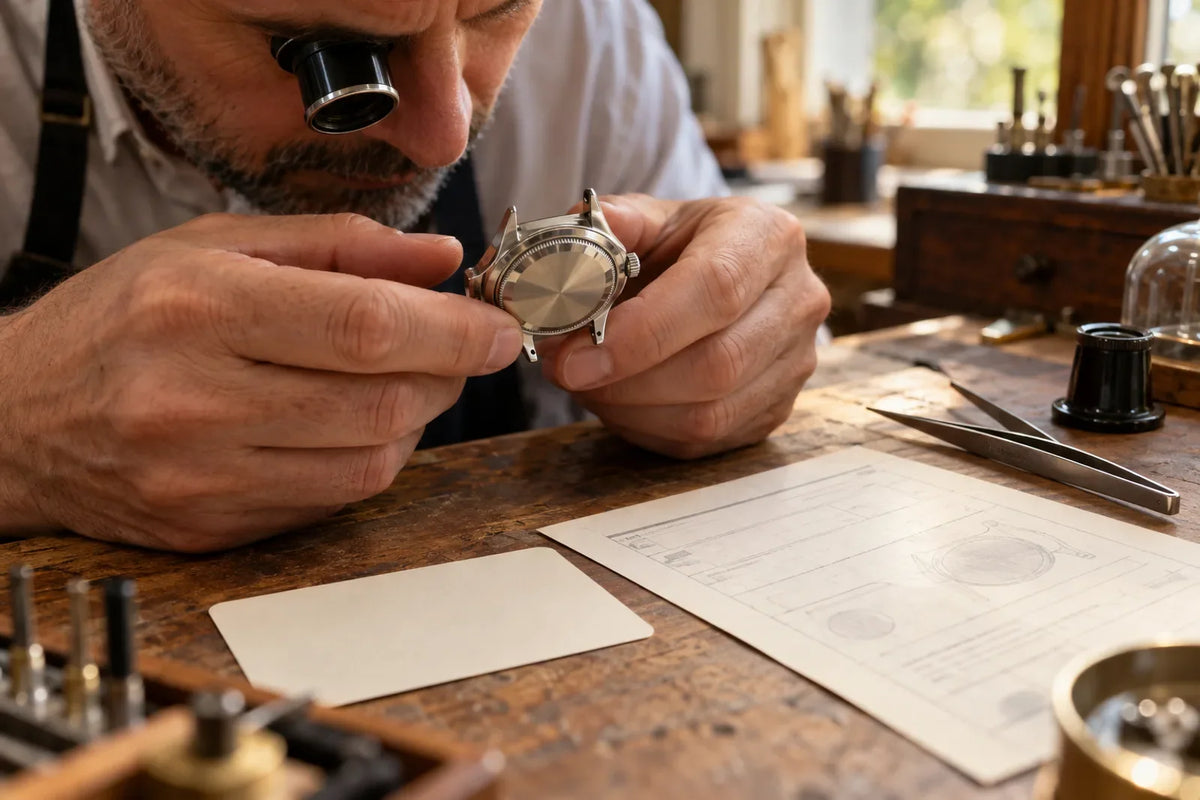
Match with the certificate, read with the caseback open |
Mismatch: most buyers walk away |
|
Service invoices |
Authorized centre, date of the last service |
No record: the cost of a service is deducted |
|
Case condition |
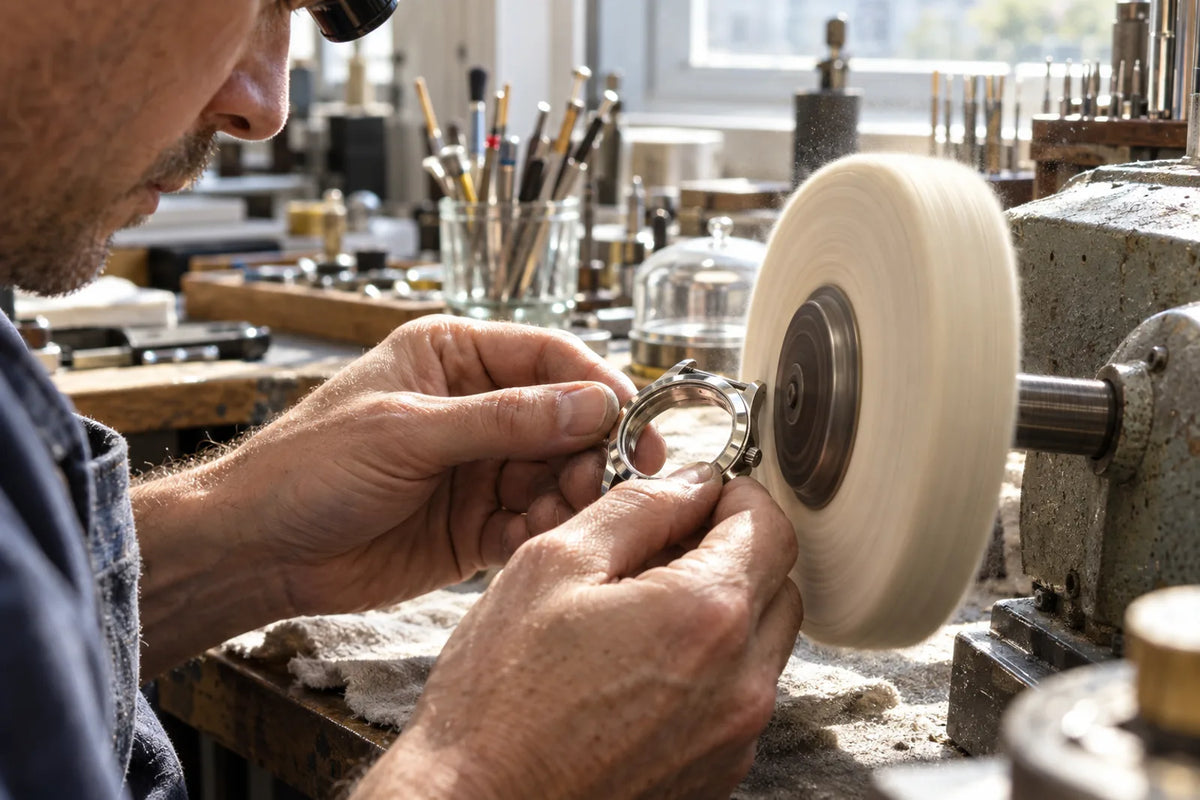
Sharp edges or edges softened by polishing |
Heavy polishing: lower offer, especially on a sports model |
|
Bracelet and clasp |
Original parts, removed links kept |
Missing links: ordered, then deducted |
|
Box and accompanying documents |
Presentation box, booklet, tags |
Complete set: more buyers |
A missing certificate lowers the price; numbers that do not match it drive the buyer away. Still, you need to know what can be read without tools.
At home, the certificate gives the expected reference and numbers, and a sapphire caseback shows the movement. The numbers themselves remain out of reach. According to Patek Philippe's FAQ on authenticity, the movement number is engraved on the movement, the case number inside the caseback, and reading them requires removing the caseback, an operation reserved for an authorized retailer, distributor or service centre. The match is therefore checked at the watchmaker's.
On a Nautilus, presented in the Nautilus 5711 guide, an over-polished bezel loses the crisp alternation of brushed and polished surfaces.
For an offer based on the piece rather than on an average, the online selling form asks for the reference, the condition and the documents available.

Complete your Patek file before listing the watch
In short: The manufacturer puts three tools within the seller's reach: the Extract from the Archives, a free service quote and the owners' register.
A lost certificate of origin cannot be reissued, but the file can be completed with the manufacturer:
- The Extract from the Archives. For a watch sold more than ten years ago, Patek Philippe's FAQ on Extracts from the Archives describes a transcription of its registers, at 500 Swiss francs, refunded if the watch is not eligible. Only one extract is issued per watch per 12-month period, and none during servicing.
- The service quote. If the watch was made after 1980, shows no visible damage and is not a Haute Horlogerie piece, it receives an immediate quote at a point of sale or authorized centre, which you can decline at no charge.
- The owners' register. The manufacturer registers a watch under a new owner only once a year. After a recent registration, let the buyer know they will have to wait.
Converted at the rate published by the Bank of Canada on October 23, 2026 (CHF 1 for C$1.6969), the extract costs about C$848.
The quote carries weight in the negotiation. The service costs published by Patek Philippe, as maximum public prices before taxes, range from CHF 900 for a manually wound watch to CHF 2,700 for the most complex complications. An automatic is CHF 1,000, or about C$1,697. The buyer prices a service their own way; an authorized, written amount anchors the discussion.
The same page states that authorized servicing is guaranteed for two years, and the guarantee is void after work by a non-authorized third party. If you have the watch serviced, do it within the network, then order the extract: the service invoice then replaces photos of the numbers, for as long as the service guarantee lasts.

The channel you choose sets the share taken from the price
In short: Buyback, consignment and auction each take their cut differently, and at auction the premium paid by the buyer also weighs on the hammer price.
A buyback pays right away, below the price at which the merchant expects to resell. Consignment pays the sale price minus a commission, which the article on the five ways to sell puts at 8 to 15%; the exact rate depends on the contract.
Auctions add a mechanism sellers rarely see coming. On top of the hammer price, the buyer pays a premium calculated as a percentage of that price. The published conditions of sale, consulted on October 26, 2026, put it between 15% and 28% depending on the auction house and the price bracket; only the signed contract is binding.
Bidders, however, think in total cost. A bidder willing to pay $100,000 in all stops at a hammer price of about $86,960 if the premium is 15%, and at $78,125 if it is 28%. Your commission is then calculated on that hammer price, not on what the buyer paid.
These fees are mainly justified for a rare piece that collectors compete for, rarely for a recent Calatrava.
Tax applies to the gain, and the commission reduces it
In short: A watch resold for more than it cost produces a capital gain, half of which was taxable in 2025, calculated after the taxes paid at purchase and the commission paid on the sale.
A Patek worn on the wrist is personal-use property. According to Revenu Québec's guide IN-120 on capital gains and losses, the gain on such property is reported only if the proceeds of the sale exceed $1,000, and the inclusion rate was 50% for 2025.
The same guide states that the cost base includes acquisition costs, including the GST and QST paid. Selling expenses, such as appraisal and commissions, are subtracted from the proceeds.
Take the Calatrava, with illustrative amounts. Bought for $34,492.50 taxes included, it sells for $45,000, minus a $5,400 commission. The gain is $5,107.50, of which $2,553.75 is added to taxable income. Without the invoice proving the taxes paid, the cost base drops to $30,000 and the reported gain climbs to $9,600. Redo the calculation with the rate in your own contract: from 8% to 15%, the commission goes from $3,600 to $6,750.
If the watch was bought abroad, the Canada Revenue Agency's guide T4037 converts the purchase price at the exchange rate on the day of acquisition, and the proceeds at the rate on the day of the sale.
A loss cannot be deducted on personal-use property, except for listed personal property, which includes jewellery. Whether a watch falls into that category should be settled with an accountant, as should the case of an owner who buys and resells often.
Three numbers to work out before selling your Patek Philippe
Take out the certificate, then have the case and movement numbers read by an authorized centre, with a service quote in hand. Find the purchase invoice, taxes included. Ask each channel for its commission rate in writing, and for the buyer's premium if you are considering an auction. Finally, subtract commission and tax from each offer: only that remainder can be compared.
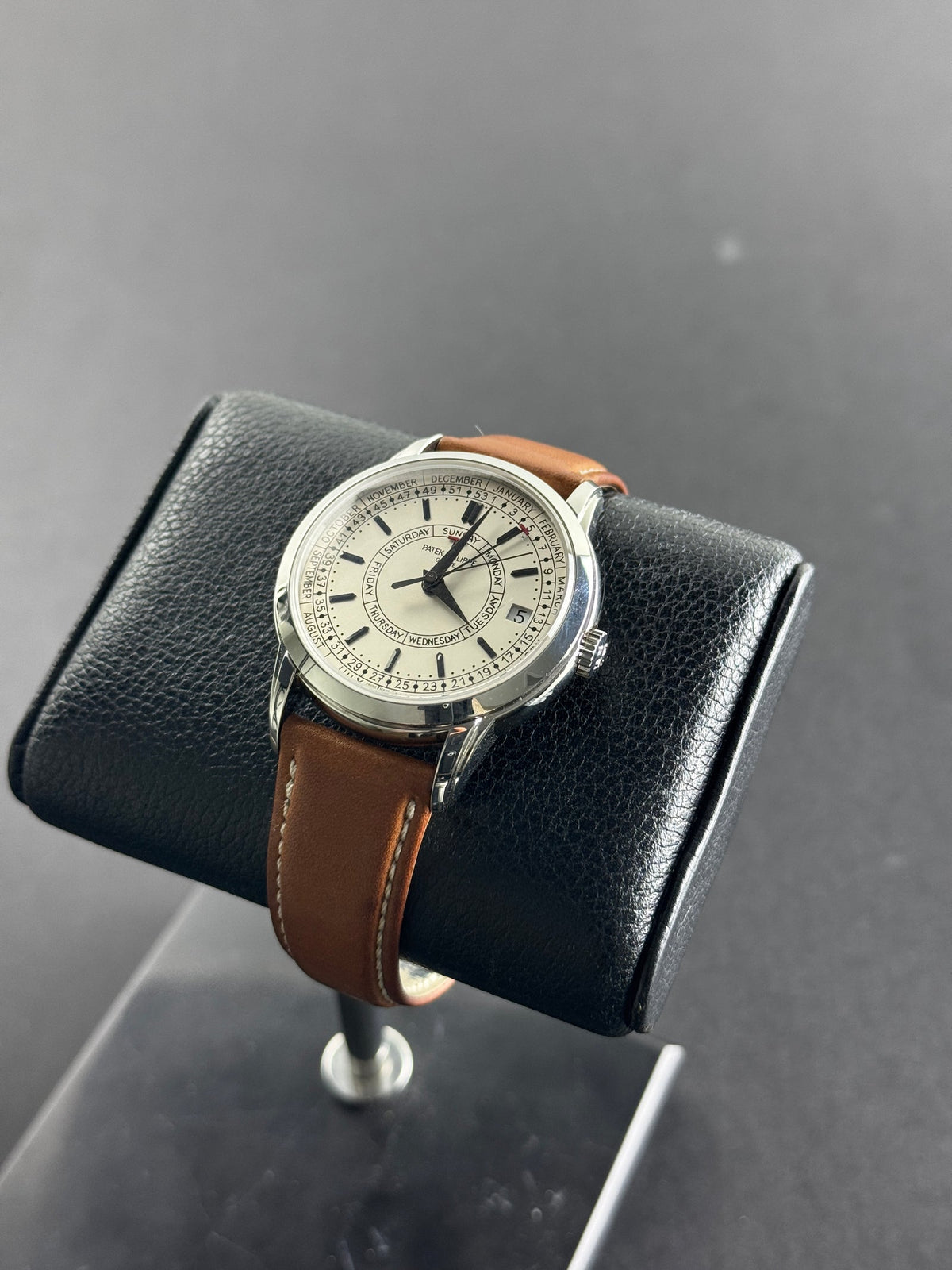
The Patek Philippe buying guide for Canada places each collection on the secondary market. To put these numbers on your own watch, an in-store examination in Montreal is available by appointment.
FAQ
Where can you sell a Patek Philippe in Canada?
To a specialized merchant, through an auction house or to a private buyer. To sell your Patek Philippe quickly, a buyback pays in a single meeting, below the resale price the merchant is aiming for. Consignment often brings in more, minus a commission set in the contract. Auctions are mainly suited to rare pieces, because the premium paid by the buyer, 15 to 28% at the houses consulted, reduces the hammer price.
Should you have your Patek serviced before selling it?
Not necessarily. Start with the quote: if the watch was made after 1980 and shows no visible damage, an authorized centre prepares it on the spot, and you can decline it at no charge. Servicing an automatic costs at most CHF 1,000 before taxes, about C$1,697. If the offer deducts more than that, the service is worth it; otherwise, the written quote is often enough to frame the negotiation.
Can a Patek without papers be sold?
Yes. A watch without a certificate of origin remains authentic if its case and movement are, which an authorized centre checks by opening the caseback. The lack of papers does, however, reduce the number of buyers, and therefore the offer. If its first sale was more than ten years ago, an Extract from the Archives at CHF 500 gives it a written record again. Also gather the purchase invoice, the service invoices and the box.
Do you have to pay tax on the sale of a watch?
Only if there is a gain. A watch resold for more than $1,000, and for more than it cost, produces a capital gain, half of which was taxable in 2025, according to Revenu Québec. The purchase price includes the taxes paid, and the selling commission is subtracted from the proceeds. A loss, on the other hand, generally cannot be deducted on personal-use property. Keep the original purchase invoice.